
How Can You Tell How Old a Cat Is?
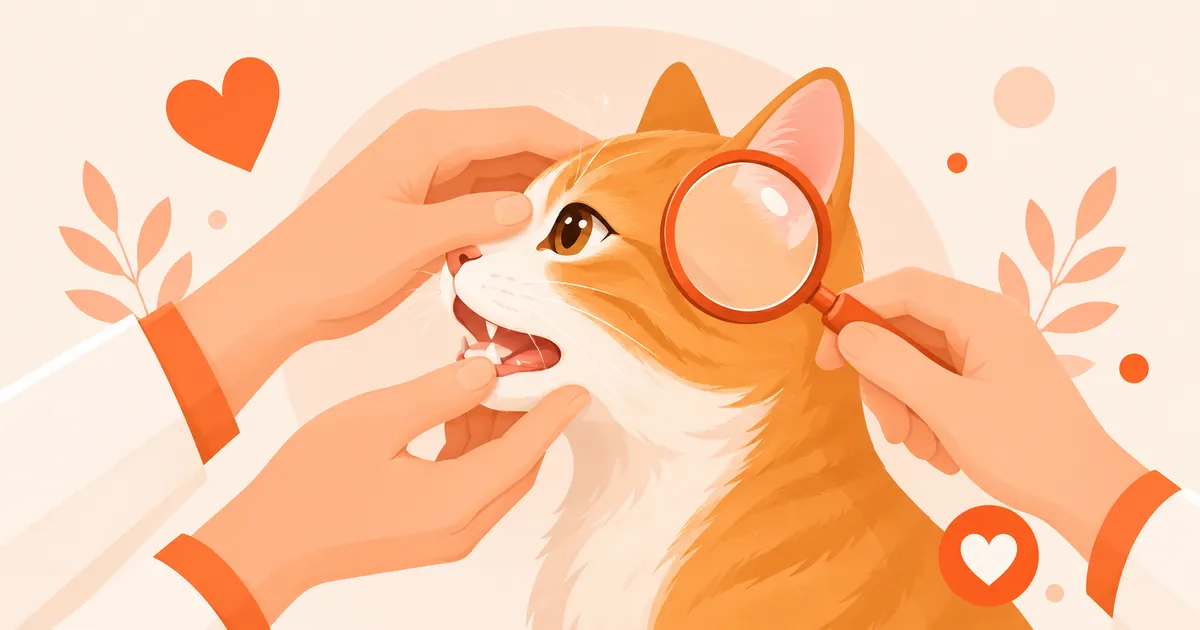
If you adopted a stray, took in a rescue, or just don’t know your cat’s real birthday, you can usually narrow down the age within a year or two using physical signs that vets check on every exam. The clues are in the teeth, eyes, coat, muscle tone, and behavior. None of them are perfect on their own, but several together can give you a confident range.
The fastest method: look at the teeth
Teeth are the single most reliable indicator of cat age, particularly for kittens and younger adults. Cats follow a predictable dental timeline:
- 2–4 weeks: Baby teeth (incisors) start coming in.
- 3–6 weeks: All 26 deciduous teeth are present.
- 3–4 months: Baby teeth start falling out as adult teeth push through.
- 6–7 months: All 30 adult teeth are in. Teeth are pristine white.
- 1–2 years: Teeth still white. Slight yellowing may begin on back molars.
- 3–5 years: Yellowing extends to more teeth. Mild tartar may appear at the gum line.
- 5–10 years: Visible tartar buildup, particularly on premolars. Some teeth may show wear flattening.
- 10+ years: Heavy tartar, possible gum recession, missing teeth, or evidence of past extractions.
- 15+ years: Significant tooth wear, often multiple missing teeth, possible dental disease.
To check teeth at home, gently lift the lip while your cat is calm. Look at the canines and the back molars first. Cats hate prolonged mouth handling, so be quick. If your cat won’t cooperate, your vet can do this in seconds during a routine exam.
A caveat about teeth
Diet, dental care, and genetics all affect how teeth age. A 4-year-old cat that was fed raw bones might have whiter teeth than expected; a 6-year-old with chronic dental disease might look much older. Teeth narrow the range; they don’t pin it precisely.
Cat Teeth by Age: Illustrated
The pictures below are simplified illustrations of what vets actually look for when they age a cat by its teeth: color, tartar at the gum line, wear, gum recession, and missing teeth. They’re schematic, not photographs, but the progression is the real one.
Under 6 months
Baby teeth arrive by 6 weeks: tiny, translucent-white, and needle-sharp. Adult teeth replace them by 6–7 months.
1–2 years
Adult teeth white and clean. By age 2 there may be the faintest dulling on the back teeth.
3–5 years
Visible tartar starts on the molars and premolars, with some yellowing and gum-line redness.
5–10 years
Tartar on most teeth, wear on the tips, and the gum line beginning to recede.
10+ years
Heavy tartar, missing teeth, and gum disease are common in senior cats without dental care.
Same caveats as with every aging sign: diet and dental care move this timeline substantially. A cat who gets regular dental cleanings can carry a 4-year-old mouth at 10, and dental disease can make a 5-year-old mouth look elderly. Pristine teeth almost always mean a cat under 2, and a heavily worn mouth almost always means 10+, but the middle years blur. Combine teeth with the eye, coat, and behavior signs below.
Eyes: cloudy lens after age 8
A cat’s eyes change in subtle, age-related ways:
- Kittens and young adults (under 3): Eyes are clear, lenses transparent, iris evenly colored.
- 3 to 7 years: Typically still clear. Iris may develop slight texture or color variation.
- 8 to 12 years: A bluish-grey haze may appear in the lens. This is called nuclear sclerosis and it’s a normal age change, not a cataract. Vision is largely unaffected.
- 12+ years: The lens haze becomes more obvious. The iris may show pigment shifts or visible texture. Some cats develop true cataracts (denser, whiter, patchier opacity).
Look at the pupil in good light, not direct sunlight. Compare both eyes to each other. Bilateral, even haze suggests age-related change. Asymmetric or patchy opacity suggests a cataract or other condition that warrants a vet visit.
Coat: density, texture, and color
Coat condition shifts with age, though diet, breed, and overall health affect it as much as years do:
- Kittens and young adults: Soft, fluffy coat. Even color and texture.
- 3 to 8 years: Mature coat, sleek and consistent. Grooming is meticulous and the cat reaches everywhere.
- 8 to 12 years: Coat may start to feel slightly coarser. Some cats develop scattered white or grey hairs, especially around the muzzle and ears. Grooming may slow down in hard-to-reach areas.
- 12+ years: Coat often becomes notably duller or thinner. Significant grey patches are common in dark-coated cats. Matted fur on the lower back or behind the shoulders is common because senior cats stop grooming those areas.
Black and dark cats show grey hairs more obviously than white or light cats, so coat aging signs are easier to read on dark-furred cats.
Muscle tone and body condition
This is the sign most owners overlook. Young cats have firm, even muscle along the spine and over the hips. Older cats lose muscle mass, and you can feel the difference:
- Under 7: Smooth, well-padded muscle over the back. Hip bones not prominently felt through skin.
- 7 to 11: Muscle starts to thin slightly. Shoulder blades may feel a little more defined.
- 11 to 14: Bony prominences become more obvious. Spine and hips feel sharper to the touch. Some loss of muscle along the back.
- 15+: Significant muscle loss is common. Cat may feel bonier despite normal weight. The back, hips, and shoulders all show prominence.
Run your hand gently from shoulders to hips. The difference between a 3-year-old and a 13-year-old is dramatic once you know what you’re feeling for.
Behavior: how energy and habits shift
Behavior alone is unreliable (some old cats stay playful, some young cats are couch potatoes), but it adds context when combined with the physical signs:
- Kittens and young adults: Bursts of intense play, frequent zoomies, exploring everything, climbing high.
- Adults (3 to 6): Settled into routines. Plays for shorter periods. Still jumps to favorite spots routinely.
- Mature (7 to 10): Slower to play, prefers chasing to running. Sleeps more, particularly in warm spots.
- Senior (11 to 14): Sleeps most of the day, less interested in extended play. May hesitate before jumping.
- Geriatric (15+): Mostly sleeps. Doesn’t jump to high spots without help. May be increasingly vocal at night.
Can a vet tell how old a cat is?
Yes, and they’re generally better at it than owners because they handle hundreds of cats a year and notice subtle markers most people miss. A vet will:
- Open the mouth and assess teeth in detail (most of the estimate comes from here).
- Check the eyes for lens changes.
- Palpate the body for muscle tone, kidney size, and lumps.
- Listen for heart murmurs (more common in older cats).
- Optionally run bloodwork, which can show age-related changes in kidney values, thyroid, and liver markers.
A vet’s estimate is usually accurate within a year for cats under 5 and within 2–3 years for cats over 8. For kittens under 6 months, the estimate is often within a couple of weeks because weight gain and teeth development are so predictable.
Kitten weight cheat sheet
A healthy kitten gains about 1 pound (around 450 g) per month for the first 6 months. So if you found a kitten that weighs 2 lbs, it’s probably around 2 months old. 3 lbs = around 3 months. 4 lbs = around 4 months. This works until 5 or 6 months, after which growth slows and weight stops being a useful age indicator.
Indicators that don’t actually work
Some commonly cited age indicators turn out not to be very reliable:
- Eye color. All kittens have blue eyes that change to their adult color by about 8–12 weeks. After that, eye color doesn’t change with age.
- Size alone. Cats vary enormously by breed and individual. A 9-pound cat might be a small Maine Coon or a hefty Singapura. Size doesn’t map to age past kittenhood.
- Nose color. Pigment changes happen but they’re not age-correlated reliably.
- Whisker color. Folklore says senior cats grow white whiskers. Some do; many don’t. Not a reliable signal.
Putting the signs together
The most reliable approach is to look at all the indicators and find the age range where they overlap. Example: a cat with mild tartar on the back molars, slight lens haze, a sleek coat, normal muscle tone, and moderate play energy is probably 5 to 8 years old. A cat with heavy tartar, missing teeth, obvious lens haze, scattered grey hairs, prominent hip bones, and mostly sleeping is probably 12+.
Once you have an age estimate, our cat age calculator can translate it into the AAHA life stage and human-year equivalent, which is more useful for planning care than a precise birthday would be.
If you still can’t tell
Adopt the age your vet estimates, write it on the calendar as your cat’s “assigned birthday,” and move on. Most rescue cats and strays end up with assigned ages that turn out to be close enough. The life stage matters more than the exact number, and the life stage is easy to read from physical condition even when the year isn’t.
Frequently asked questions
Can a vet tell how old a cat is?
Yes, a vet can usually estimate a cat’s age within a year or two by examining teeth, eyes, coat, muscle tone, and overall condition. For kittens under six months, the estimate can be very accurate (often to within a few weeks) because teeth come in on a predictable schedule. For adult and senior cats, the estimate becomes a range rather than a precise number.
How can you tell if a cat is old?
Older cats often show a combination of signs: yellowed or worn teeth with visible tartar, a slightly cloudy haze in the eyes (nuclear sclerosis), thinning coat with possible gray patches, prominent shoulder blades and hips from muscle loss, and reduced jumping or climbing. No single sign is definitive, but several together suggest a cat is past about 10 years old.
How can you tell how old a kitten is?
Kitten age is easier to estimate than adult cat age because development happens fast and on a predictable timeline. Weight is a good guide: a healthy kitten gains roughly one pound per month for the first six months. Eyes open around day 10, teeth come in starting at three weeks, and adult teeth replace baby teeth between four and six months.
Calculate Your Cat’s Age & Life Stage →Sources
- American Animal Hospital Association & American Association of Feline Practitioners. Feline Life Stage Guidelines.
- Cornell Feline Health Center, College of Veterinary Medicine, Cornell University. Reference materials on feline aging.
- Little SE (editor). The Cat: Clinical Medicine and Management. Saunders, 2012.
Written by the Cats Age Calculator editorial team · How we research & fact-check