
How Breed Affects Cat Lifespan
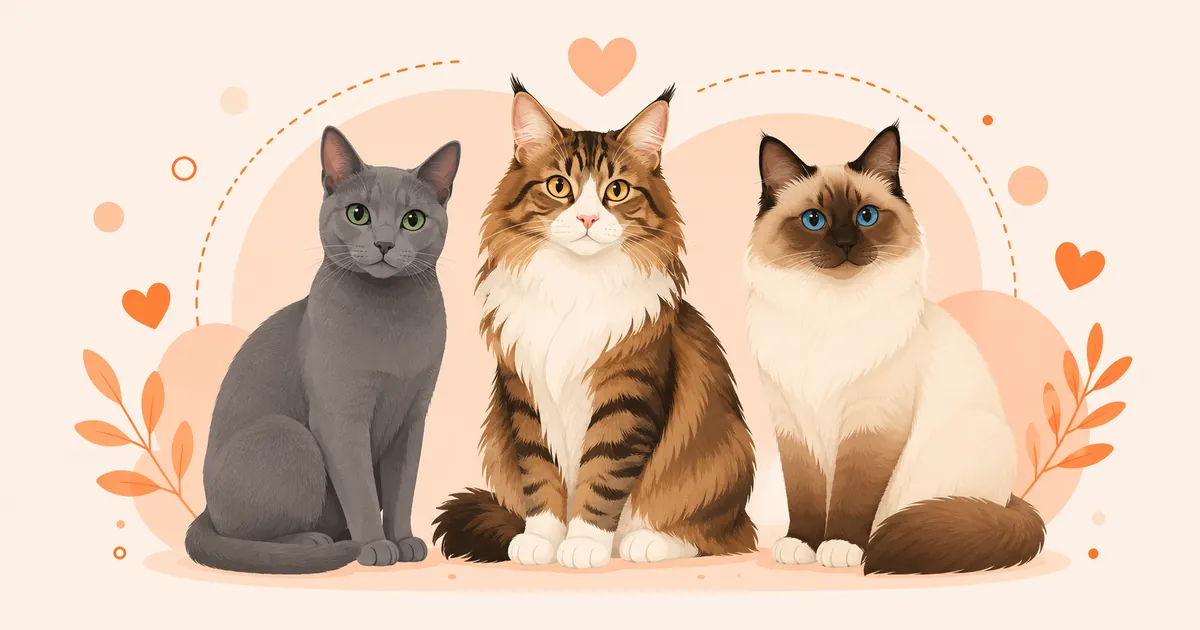
Cat lifespan varies less by breed than dog lifespan does. Size doesn’t shorten cat lives the way it shortens dog lives. But specific breeds do carry specific genetic risks that show up in lifespan averages, and a few breeds consistently outlive others. Here’s how the most common breeds compare.
Mixed-breed cats (domestic shorthair / longhair)
Typical lifespan: 12–18 years (indoor)
The most common cats are also among the longest-lived on average. Hybrid vigor (the dilution of recessive disease genes that comes from a larger gene pool) consistently outperforms the tighter genetic lines of purebreds. A healthy indoor domestic shorthair can routinely reach 17 or 18.
Siamese
Typical lifespan: 12–20 years
Among the longest-lived purebreds. Known health concerns include progressive retinal atrophy in some lines, amyloidosis (affecting kidneys and liver) in others, and occasional dental issues from their narrow muzzle structure. Active, vocal cats that often stay engaged well into senior years.
Burmese
Typical lifespan: 15–18 years
Closely related to Siamese, similar lifespan profile. Burmese have a known predisposition to diabetes, particularly in Australian and European lines. Hyperthyroidism risk is also slightly elevated. With good weight management and annual screening, most Burmese live to 16 or 17.
Maine Coon
Typical lifespan: 10–15 years
The largest pet cat breed, weighing 13–25 pounds. Maine Coons have a well-documented genetic predisposition to hypertrophic cardiomyopathy (HCM) caused by a specific gene mutation; responsible breeders screen for it. Hip dysplasia is also more common than average. The good news: with cardiac monitoring and weight management, plenty of Maine Coons reach 15. They’re slow-growing (full size at 3–4 years), which contributes to their joint considerations later.
Persian
Typical lifespan: 12–17 years
Persians have several breed-specific health concerns: polycystic kidney disease (PKD) in older lines (now mostly screened out by responsible breeders), brachycephalic facial structure causing breathing issues and chronic eye tearing, and a higher rate of dental crowding. Lifespan averages run shorter than Siamese-type breeds primarily because of these inherited issues.
Ragdoll
Typical lifespan: 12–17 years
Large, docile cats. Ragdolls share the HCM genetic risk with Maine Coons but have a different specific mutation; testing is well-established. Otherwise generally healthy with low inherited disease burden. Indoor lifestyles suit their relaxed personalities well.
British Shorthair
Typical lifespan: 12–17 years
Stocky, calm cats with relatively low inherited disease burden. Known HCM predisposition (testing recommended for breeding lines). Tend toward obesity due to their low-activity disposition, which makes weight management central to lifespan.
Russian Blue
Typical lifespan: 15–20 years
One of the longest-lived purebreds. Notably low inherited disease burden compared to most pedigreed breeds. Tendency toward food motivation means weight needs watching, but otherwise robust health.
Abyssinian
Typical lifespan: 9–15 years
Active, athletic cats. Genetic predisposition to pyruvate kinase deficiency (a treatable form of anemia) and progressive retinal atrophy in some lines. Most Abyssinians live full lives with no breed-specific issues.
Bengal
Typical lifespan: 12–16 years
Wild-ancestor (Asian leopard cat) hybrid breed. Bengals are athletic and high-energy. Known predispositions include HCM, progressive retinal atrophy, and hip dysplasia. They benefit from environmental enrichment well into senior years.
Sphynx
Typical lifespan: 8–14 years
Hairless cats. Higher than average rate of HCM (the leading cause of premature death in the breed). Skin issues from lack of fur protection require regular bathing. The breed’s gene pool is narrower than most, contributing to shorter average lifespans.
Norwegian Forest Cat
Typical lifespan: 12–16 years
Large semi-longhaired breed with predispositions to HCM, hip dysplasia, and glycogen storage disease (a rare hereditary condition now mostly screened out). Generally a robust breed.
Scottish Fold
Typical lifespan: 9–13 years
The gene that produces the folded ears also causes a cartilage and bone disorder called osteochondrodysplasia, affecting all Scottish Folds to some degree. Lifespan ranges shorter than most breeds because of this skeletal condition. Many vet organizations have raised welfare concerns about the breed.
Munchkin
Typical lifespan: 12–15 years
The short-legged trait is caused by a form of dwarfism. Specific breed-related concerns include lordosis (spinal curvature) and pectus excavatum. Otherwise generally healthy, though long-term breed data remains limited.
What matters most within a breed
Indoor lifestyle. A Maine Coon kept indoors with good vet care will routinely outlive an indoor/outdoor Siamese, regardless of which breed has the “higher average lifespan” on paper. Breed sets a range; lifestyle determines where in that range your cat lands.
What matters more than breed
Across all the breeds above, the lifespan range within any single breed is wider than the average difference between breeds. A well-cared-for Persian can live to 18. A poorly-cared-for Siamese might not reach 12. The biggest lifespan factors are:
- Indoor vs outdoor lifestyle (huge effect, see our indoor vs outdoor article).
- Spay/neuter status (significant effect).
- Body condition (significant effect; obesity shortens lives).
- Regular vet care with senior bloodwork (significant effect).
- Genetics, including breed (moderate effect, mostly through specific disease risks).
Knowing your cat’s life stage matters as much as knowing the breed average. Use our cat age calculator for a quick read on where your specific cat sits on the AAHA scale, regardless of breed.
What this comes down to
Breed gives you a starting range. Most purebreds land between 12 and 18 years; mixed breeds tend to slightly outlast purebreds. Breed-specific genetic conditions (HCM in Maine Coons, Ragdolls, Bengals; PKD historically in Persians; cartilage issues in Scottish Folds) matter for choosing screening and care. But within any breed, indoor lifestyle and good preventive care matter more than the breed average alone. For a breed-by-breed breakdown, see our sortable cat breed lifespan chart.
Calculate Your Cat’s Age & Life Stage →Sources
- O’Neill DG, et al. “Longevity and mortality of cats attending primary care veterinary practices in England.” Journal of Feline Medicine and Surgery, 2015.
- Cattery genetic health surveys from the International Cat Care organization (icatcare.org).
- American College of Veterinary Internal Medicine consensus statements on feline cardiomyopathy and chronic kidney disease.
Written by the Cats Age Calculator editorial team · How we research & fact-check